
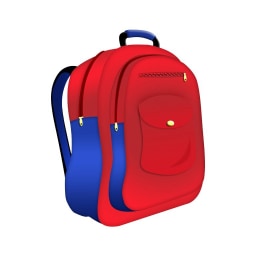
When emerging decoders transition from single word-family lists to mixed decodable readers, medial vowel substitutions frequently arise. A student who confidently reads "bat" or "pin" in isolation may encounter the word bug in a connected story and impulsively blurt out "bag" or "big."
This error is not a random blunder. It occurs because novice readers naturally cling to the high-salience tactile anchors of beginning and ending consonants—in this case, the crisp bilabial pop of /b/ and the firm velar stop of /g/. Seeing the familiar b_g boundary, an impulsive reader quickly retrieves the first word associated with that consonant shell instead of processing through the vowel.
To extinguish this guessing reflex, reading clinicians and structured literacy teachers rely on minimal contrast triplets: sets of three decodable words that share identical consonant boundaries while varying only the medial vowel. By teaching bag vs. big vs. bug alongside the liquid-onset set rag vs. rip vs. rug, educators require children to inspect the center of each word and link its physical mouth position directly to the printed letter.
Here is an explicit multisensory lesson guide designed to resolve short a, i, and u confusions in under fifteen minutes.
The Articulatory Science: Feeling /æ/, /ɪ/, and /ʌ/
Vowels cannot be felt with the teeth or lips in the same manner as consonants like /m/, /f/, or /t/. Instead, they are defined by tongue height, jaw opening, and muscular tension. Explicitly teaching these kinesthetic contrasts gives learners an internal articulatory compass when reading and spelling:
1. Short A (/æ/ as in bag, rag)
- Mouth Posture: Low-front open vowel.
- Lip & Jaw Position: Wide jaw drop. The mouth opens vertically, while the tongue stays low and forward against the lower incisors.
- Tactile Cue: Place two fingers under the chin. Feel the chin drop sharply downward as you vocalize /æ/—"wide open alligator apple."
2. Short I (/ɪ/ as in big, rip)
- Mouth Posture: High-mid front lax vowel.
- Lip & Jaw Position: Soft, narrow horizontal smile. The jaw stays relatively high, and the tongue arches up and forward.
- Tactile Cue: Touch the corners of the mouth with your fingertips. Feel the slight sideways stretch as you say /ɪ/—"gentle itchy smile."
3. Short U (/ʌ/ as in bug, rug)
- Mouth Posture: Mid-central neutral vowel.
- Lip & Jaw Position: Completely neutral and relaxed. The lips do not smile or round; the jaw hangs slightly open, and the tongue rests flat in the floor of the mouth.
- Tactile Cue: Rest a hand flat on the chest. Exhale a quiet, effortless sigh—/ʌ/—"relaxing sigh."
A 15-Minute Small-Group Intervention Plan
Step 1: Auditory Discovery & Mouth Mirroring (3 Minutes)
Begin without any printed letters. Say the three words aloud in sequence: bag, big, bug.
- Ask students: "Listen closely to these three words. How do they start? How do they end? What changes?"
- Lead students to notice that all three begin with /b/ and finish with /g/.
- Have each child hold a handheld mirror to observe their own mouth movements:
- Say /b/ - /æ/ - /g/: Observe the wide chin drop of bag.
- Say /b/ - /ɪ/ - /g/: Observe the narrow smile of big.
- Say /b/ - /ʌ/ - /g/: Observe the relaxed neutral posture of bug.
Step 2: Push-and-Say Sound Boxes (3 Minutes)
Provide students with three-box Elkonin sound mats and three colored counters:
- Have students slide counters into the boxes as they segment r-a-g: /r/ - /æ/ - /g/.
- Instruct them to pull down only the middle counter and replace it with a blue counter to build r-i-p: /r/ - /ɪ/ - /p/.
- Swap the counters again to assemble r-u-g: /r/ - /ʌ/ - /g/.
- Emphasize that swapping the single vowel in the middle transforms an old cleaning rag into a paper rip, or a warm floor rug.
Step 3: Orthographic Mapping & Highlighted Reading (3 Minutes)
Transition directly to print using the interactive CVC short a i u review page:
- Display the digital cards for bag, big, and bug.
- Draw attention to the center letter highlighted in red.
- Have students trace the medial vowel in the air or on a textured surface while vocalizing the sound:
- Curve around, up, and down for a (/æ/)
- Down and dot for i (/ɪ/)
- Down, under the bowl, and straight down for u (/ʌ/)
Step 4: Rapid Discrimination with Bitsboard Games (3 Minutes)
Open Bitsboard on a tablet or classroom screen:
- Launch Photo Touch: The app speaks the target word (e.g., "big"), and the student must tap the corresponding photo from choices showing a school bag, an enormous elephant, and a ladybug.
- Launch Letter Match: The outer consonants (b_g) remain locked in place, and students rapidly choose and place the correct vowel tile (a, i, or u) to spell the prompted word.
Step 5: Handwriting & Printable Application (3 Minutes)
Distribute the free printable CVC short a i u review worksheet pack:
- Students complete the Trace and Write exercise, verbalizing each phoneme as their pencil forms the letter strokes.
- Use the Roll and Read game board as an exit check: each child rolls a die, reads the corresponding word row, and confirms their vowel mouth shape before heading to independent learning stations.
Addressing Common Pitfalls
- Regional Vowel Mergers and Blurring: In regions where short low vowels merge or nasalize, learners may find /æ/ and /ʌ/ acoustically similar. Rely heavily on tactile chin-drop feedback: short a requires significant jaw opening, whereas short u stays neutral.
- Rushing through Medial Letters: If a reader glances at bug and blurt out "bag," tap the center letter. Ask: "What letter is that? Relax your jaw: /b/ - /ʌ/ - /g/, bug."
- Reversing Graphemes a and u: Because lowercase a and u both feature rounded curves and vertical stems, struggling decoders occasionally confuse them visually. Handwriting tracing lines anchor the distinct motor sequence of curving around first (a) versus diving down into a cup (u).
Extension Activities for Literacy Centers
- Three-Way Vowel Sorting Trays: Cut out the picture cards from the worksheet pack and provide three sorting baskets labeled with an open jaw (short a), smiling mouth (short i), and neutral cloud (short u).
- Tactile Sand Tracing: Fill a shallow tray with craft sand. Call out bag, big, or bug, and have students write only the medial vowel grapheme into the sand with their index finger.
- Decodable Sentence Building: Invite learners to build simple sentences featuring their contrast words: "A big bug sat on a rag." or "Pack the big rug into the bag."