
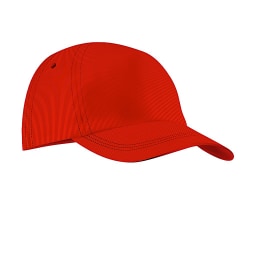
When beginning readers transition from single-family word lists into mixed decodable text, medial vowel substitutions frequently surface. While children quickly master consonant sounds whose articulatory friction and stops are tactile (such as /p/, /t/, or /m/), vowels exist on an open, acoustic continuum.
Among the five short English vowels, the triad of short a (/æ/), short o (/ɒ/), and short u (/ʌ/) accounts for a major share of reading errors. Because all three vowels require an open mouth posture and share overlapping vocal-tract resonance, emerging decoders, English learners, and students in Tier 2 reading interventions often substitute them indiscriminately—reading cop as "cap" or "cup," and decoding mop as "map" or "mug."
To build permanent orthographic mapping, instruction must move beyond generic flashcards. By isolating these vowels through matching-onset contrast triplets—cap vs. cop vs. cub, and map vs. mop vs. mug—teachers and reading specialists can diagnose specific confusions and anchor lasting phonological awareness.
The Articulatory Differences: How the Vocal Tract Shapes /æ/, /ɒ/, and /ʌ/
Teaching children the physical sensations of vowel production bridges the gap between auditory perception and letter recognition:
1. Short A (/æ/ as in cap, map, bag)
- Jaw Drop: Wide and vertical. The chin drops noticeably downward.
- Tongue Position: Low-front. The tongue body pushes forward and down behind the lower front teeth.
- Lip Shape: Flat and unrounded, slightly pulled into a neutral grin.
2. Short O (/ɒ/ as in cop, mop, dog)
- Jaw Drop: Moderately open.
- Tongue Position: Low-back. The tongue pulls slightly backward into the oral cavity.
- Lip Shape: Distinctly rounded into an upright oval. This lip rounding is the primary physical differentiator from short a.
3. Short U (/ʌ/ as in cub, mug, bug)
- Jaw Drop: Relaxed and partially open (mid-level drop).
- Tongue Position: Central and relaxed flat along the bottom of the mouth.
- Lip Shape: Neutral and completely unrounded, exactly like a natural, effortless sigh ("uh").
/æ/ (Short A) -> Wide vertical jaw drop -> Flat lips   -> Forward tongue
/ɒ/ (Short O) -> Open mouth height      -> Rounded oval -> Retracted tongue
/ʌ/ (Short U) -> Neutral relaxed mouth   -> Loose lips   -> Flat resting tongue
Kinesthetic Diagnostic Cues: "Chin Drop, Oval O, and Gentle Sigh"
When a student hesitates or guesses on a medial vowel, use targeted physical cues rather than repeating the word:
1. The Two-Finger Chin Drop (for Short A)
Have the student place two fingers (index and middle) vertically between their upper and lower lips or under the chin:
- Say cap: The chin drops firmly into the fingers.
- Prompt: "Did your chin drop wide open for /æ/?"
2. The Mirror Oval Check (for Short O)
Provide a handheld mirror:
- Say cop: The student observes their lips rounding into a tall oval shape.
- Prompt: "Make your lips make an 'O' ring before saying the middle sound."
3. The Stomach Sigh Cue (for Short U)
Have the child place a flat hand against their belly:
- Say cub: The stomach releases softly without any facial or lip tension.
- Prompt: "Keep your mouth relaxed and sleepy. Let the sound drop out like a sigh."
High-Leverage Matching-Onset Contrast Triplets
When words share the initial consonant, children cannot rely on first-letter guessing. They must decode through the entire word:
| Short A (/æ/) | Short O (/ɒ/) | Short U (/ʌ/) | Contrast Mechanism |
|---|---|---|---|
| cap | cop | cub | Identical onset /k/; cap & cop share coda /p/; cub contrasts medial /ʌ/ and final /b/ |
| map | mop | mug | Identical onset /m/; map & mop share coda /p/; mug contrasts medial /ʌ/ and final /g/ |
By contrasting words with identical onsets, educators isolate the medial vowel, making differences clear to visual and auditory learners alike.
12-Minute Small-Group Diagnostic Routine
Here is an evidence-based, 12-minute daily routine for reading intervention groups, speech-language therapy, or classroom phonics centers:
Minutes 1–3: Articulatory Warm-Up & Mouth Checks
- Display real photographic cards for cap, cop, and cub.
- Model the phonemes: /k/ - /æ/ - /p/, /k/ - /ɒ/ - /p/, /k/ - /ʌ/ - /b/.
- Have students echo each word while holding up a hand mirror or touching their chin to feel jaw drop and lip shape.
Minutes 4–7: Multisensory Interactive Play in Bitsboard
- Open the CVC short a o u review page in Bitsboard.
- Photo Touch: The app pronounces a target word (e.g., "cop"), and the student must distinguish it from cap and cub by selecting the correct real-world photograph.
- Letter Match: The app displays an incomplete word (e.g., c _ p) alongside an image of a police officer. The student drags the correct vowel token (o) into place, strengthening orthographic recall.
Minutes 8–10: Printable Workbook Practice
- Distribute the matching CVC short a o u review worksheet.
- Students complete the Trace and Write exercise, verbally segmenting each phoneme aloud as their pencil touches the page.
- Direct students to use three distinct colored pencils (e.g., blue for a, orange for o, purple for u) to visually reinforce letter-sound mapping.
Minutes 11–12: Rapid Dice Fluency Challenge
- Pair students up with Page 4 of the worksheet (Roll and Read).
- Students take turns rolling a die and reading the corresponding row across, earning a token for accurate, fluent vowel pronunciation without consonant stalling.
Summary & Next Steps
Targeting vowel confusions with physical articulatory cues, matching-onset word triplets, and interactive digital practice equips young readers with reliable decoding strategies.
- Explore the interactive online games on the CVC short a o u review hub.
- Download and print the free 4-page CVC short a o u review worksheet pack.
- Browse the full library of decodable word families and phonics printables on Bitsboard Phonics.